

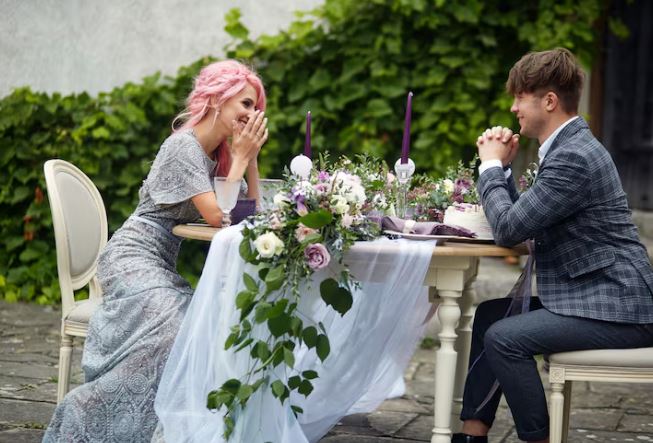
It was at a wedding outside Bath last autumn that I realized something had really changed. The bride’s father, a retired accountant who claimed to have attended “more weddings than birthdays,” was standing with a small wooden board that contained one pickled walnut, three roasted beets, and a smear of cashew cream. He stared at it for a long time. “Where’s the beef?” he asked, almost to himself. His spouse chuckled. He consumed the beets. He returned for more.
Every time caterers tell me how much the work has changed over the past two or three years, I can’t help but think of that little scene. It’s not a loud change. The end of the chicken-or-fish dinner has not been declared by any industry summit or manifesto. Couples, however, have quietly started asking different questions—almost obstinately. This month, what is expanding within twenty miles of the venue? Can the chef also use the tops of the carrots? Is it possible to completely avoid the silver chafing dishes?
| Trend Name | Nature-Led Wedding Catering |
| Estimated Market Shift | Roughly 60–70% of couples now request seasonal or plant-forward options |
| Primary Venues | Woodlands, farms, vineyards, coastal clearings, restored barns |
| Core Menu Philosophy | Hyper-seasonal, locally sourced, low-waste |
| Common Ingredients | Wild greens, foraged mushrooms, root vegetables, heritage grains |
| Service Style | Grazing tables, open-fire asado grills, shucking stations |
| Serving Materials | Wood slabs, slate, stone boards, bamboo, ceramic |
| Average Wedding Waste (Traditional) | Over 400 lbs of garbage and 63 tons of CO₂ |
| Sustainable Catering Demand | Rising sharply year-on-year, per industry reports |
| Geographic Hotspots | UK countryside, US Pacific Northwest, parts of South Asia, Australia |
According to caterers I’ve spoken to, they experienced an unexpected level of creative pressure. In the past, creating a menu meant selecting between two proteins and a vegetarian option that was subtly hidden at the bottom of the card. Nowadays, the vegetable is frequently the focal point, and the protein—when it is present at all—is sourced locally and occasionally given the farm’s name. One Somerset chef told me that she and the bride spent an afternoon last June picking elderflowers for the welcome drink while strolling through a hedgerow. She claimed that her enjoyment of it nearly embarrassed her.
The food seems to be working harder than it used to. It is expected to reflect the setting, carry the season, and make a non-lecturing gesture toward the couple’s ideals. For a plate of food, that is a lot to ask. Nevertheless, it works at the best weddings. Somehow, the grazing table, littered with slabs of aged cheddar, rye crackers, and figs, feels like a part of the scenery. The natural gravity of the evening is created by the asado grill smoking close to the tree line.
Instagram may be the driving force behind some of this. In pictures, long wooden tables appear stunning. Photographs of foraged greens look good. However, I don’t quite buy that explanation because it’s too simple. Instead, what I continue to hear is more akin to tiredness with the old script. After witnessing enough identical weddings, couples in their late twenties and early thirties are aware of what they don’t want. The chicken breast without bones in a cream sauce. The sculpture is made of carved ice. The plated formality that never ends.
The thing that shocked me the most was the move toward zero waste. Using “total utilization,” caterers describe cooking with stems, peels, bones, and scraps that were previously thrown away carelessly. Instead of ordering a specific cut weeks in advance, a London caterer said he now bases menus on what the local fishmonger has left at the end of the week. According to him, it alters the work’s rhythm. He becomes a better chef as a result. Another question is whether it lowers the cost of the wedding; most couples I spoke with said it costs about the same, sometimes slightly more.
Naturally, not every couple desires this. The hotel ballroom and the three-course set menu are still popular, and there’s nothing wrong with that. However, the industry has begun to take notice of the woodland weddings, barn weddings, and small farm get-togethers. Even conventional venues are subtly changing their lists of preferred vendors.
It’s difficult to ignore the fact that what’s happening on the plate is actually a discussion about the ideal wedding. Maybe less performance. More getting together. It’s really unclear if that will endure over the coming years or if it turns into a cliché in and of itself. For the time being, the fathers of the brides keep returning for seconds as the beets continue to arrive on wooden boards.
