

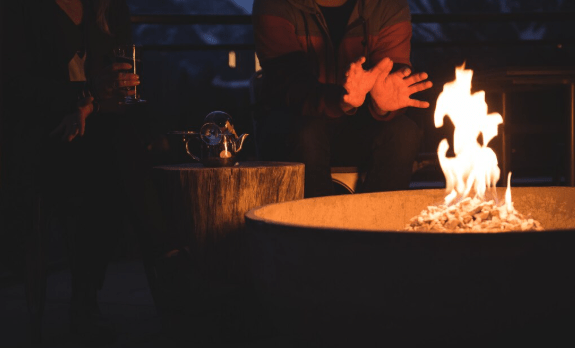
Usually, the fire comes first. A few chairs are pulled into a loose circle by someone. The lid of a grill opens. The wood starts to crackle. The room feels different in a matter of minutes, as though the air has changed. Strangers bend closer to one another. Discussions begin in bits and pieces before expanding. Plates emerge. Food starts to move from one person to another. And a group has subtly transformed into something akin to a small community before anyone even realizes it. There’s a chance that people never completely outgrew campfires.
| Key Information | Details |
|---|---|
| Topic | Social Psychology of Fire and Communal Dining |
| Field | Anthropology, Psychology, Social Connection |
| Key Concept | “Campfire Principle” – humans bond around fire and shared food |
| Core Social Behavior | Communal dining (commensality) |
| Cultural Context | Bonfires, BBQs, communal restaurants, family gatherings |
| Reference Website | https://www.modernflames.com |
Early humans gathered around flames for warmth and protection for thousands of years, as anthropologists frequently note. Naturally, the fire served a practical purpose by deterring predators and rendering food edible. However, observing contemporary events makes it difficult to overlook something more profound. People are still drawn inward by a flame’s glow, almost instinctively. A circle is formed. Lower voices. Phones vanish from the hands. Something old seems to come alive.
While cooks slid pizzas into the flames, smoke from a wood-fired oven slowly drifted into the air on a recent evening outside a busy restaurant patio. Individuals who came in separately ended up standing close to the oven, observing the procedure as if they were attendees at a silent performance. Someone commented on the smell of the charred crust. Another questioned a stranger about the topping they had chosen. Within minutes, a conversation formed between people who had never met before. Fire has a strange way of doing that.
Researchers studying what’s sometimes called the “campfire principle” argue that flames create conditions for conversation that modern spaces rarely offer. Fire slows everything down. Cooking over it takes time. You wait while the meat turns slowly on the grill or the vegetables soften in the heat. That waiting—unplanned, unstructured—creates room for interaction. It’s difficult to ignore how different that feels from regular dining.
Nowadays, a lot of restaurants serve fast food that is consumed in between phone glances and the stress of hectic schedules. The rhythm shifts around a fire. The coals are checked by someone. Another person flips skewers. The scent of cumin or garlic wafts across the table. Instead of being a background task, the process itself becomes a shared activity. When the food is finally brought to the table, something similar occurs.
Whether they are mezze, tapas, barbecue trays, or just plain bowls set in the middle, shared plates cause a minor but significant change in behavior. Leaning in, they reach across the same area. The final piece of bread is offered by someone. Without being asked, someone else passes a dish. These small, almost instinctive gestures quietly uphold a sense of equality.
Sociologists call this “commensality,” the practice of eating together from shared food. The word sounds academic, but the behavior is familiar to anyone who has sat at a crowded table while dishes move constantly between hands.
As those moments play out, it’s evident that shared plates subtly break down barriers. Formality wanes. Discussions get broader. People begin sharing stories about their travels, childhood meals, or a recipe their grandmother once prepared. The table becomes more about belonging than it is about eating.
Strangely enough, the smoke also matters. The aroma of wood smoke is strongly associated with memories. It is the scent of family get-togethers that continued long after dusk, street grills at night markets, and campfires from childhood vacations. Sometimes for hours, that odor clings to clothing and hair, leaving a subtle trace of where people have been.
Although the precise cause of smoke’s emotional appeal is still unknown, psychologists believe it has to do with the brain’s relationship between memory and smell. Scents go straight to areas of the brain associated with emotion, in contrast to visual cues. A hint of burning wood can evoke whole scenes, including music, laughter, and a specific summer evening. These sensory details come together around a fire. Your face’s warmth. The sound of wood breaking. Glasses and plates reflect the shifting orange light.
These are not dramatic encounters. However, they are immersive. The shape of the gathering is another minute detail that is frequently overlooked. Instead of arranging people in rows, fire pits, grills, and ovens typically arrange them in circles or semicircles. That geometry is important. Conversation flows differently when everyone is facing the same direction. People can see each other’s facial expressions. The circle is traversed by stories. It establishes a tiny makeshift village.
This phenomenon is linked by some sociologists to what is known as the “third place,” which is a setting that is comfortably in between home and work. That location could have been a town square or a local café in previous generations. It appears more frequently in patios and backyards—anywhere there is a fire and food is shared. Observing these events gives one the impression that something subtly healing is taking place.
Modern life has become quick, efficient, and oddly lonely. Meals are frequently consumed quickly, alone, and occasionally in front of screens. That pattern is upset by fire. It encourages visitors to stay longer than they had intended. The flames require attention, but in a soothing way that promotes pauses rather than urgency.
And almost unintentionally, a connection starts to form during those pauses. The group around the table seldom resembles the same group of people who came earlier by the time the fire is low and the last bits of bread are gone. There has been a name exchange. Tales told. Someone proposes that they get together once more.
