

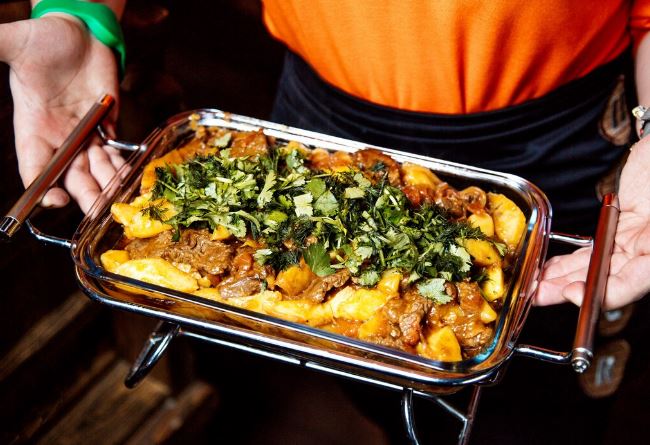
The restaurant appeared to be crowded but orderly—the kind of spot where people just show up without much planning. Inside, the glow from a brick oven flickered against a wall painted the color of warm clay, and a few small tables were set up on a narrow patio. Before the evening dragged on for too long, the original plan—or at least the intention—was straightforward: grab a drink, perhaps share an appetizer, and then head home.
There was no actual hunger. It had been a heavy, late lunch, the kind that lingers in the background for hours. However, the smoky, warm, slightly sweet air in the room continued to draw attention to the oven at the back of the kitchen.
| Category | Details |
|---|---|
| Culinary Method | Wood-Fired Cooking |
| Signature Foods | Wood-fired pizza, roasted vegetables, smoked eggplant, burgers |
| Key Feature | High-heat oven fueled by hardwood producing smoky flavor |
| Dining Atmosphere | Rustic kitchens, open ovens, bustling casual restaurants |
| Typical Cooking Temp | 600–900°F in traditional ovens |
| Cultural Origin | Mediterranean and Italian cooking traditions |
| Reference | https://www.fornobravo.com/pizzaquest |
A chef turned a pizza that was starting to blister at the edges by sliding a long wooden paddle inside the firebox. Before the paddle vanished once more, flames licked the crust, briefly illuminating the toppings.
It’s difficult to ignore that moment.
Long before stainless steel kitchens and precisely calibrated electric ovens, wood-fired cooking existed for centuries. The process is fairly straightforward: burn hardwood, heat the stone floor until it is blazing, and then swiftly cook food in the radiant heat. However, simplicity frequently conceals something more intriguing. When food is prepared this way, it changes rather than just bakes.
A portion of the appeal can be explained by watching a pizza come out of a wood oven.
Not all of the crust is smooth. The surface rises unevenly where air expanded inside the dough, and it is dotted with dark bubbles and slightly charred in some places. Restaurants occasionally attempt to replicate this effect using powerful equipment, but when real fire is involved, there is a slight difference.
The plate doesn’t arrive until the smell does.
Someone who had been drinking a cocktail at the next table leaned forward as the waiter placed a pizza with thin ribbons of pickled onion, apple slices, and roasted pork on top. On paper, the combination sounded a little odd. In actuality, however, the harmony of the smoky meat and sweet fruit caused people to stop after just one bite.
Then they grabbed another piece.
These little moments of surprise are a common feature of wood-fired restaurants. Typically, the menus are brief and consist of pizzas, roasted vegetables, and maybe one or two hamburgers baked in cast-iron pans. The variety isn’t important. It’s the depth of flavor that heat and smoke produce.
In that setting, vegetables in particular behave differently.
Next came a plate of roasted eggplant, its insides so tender they would fall apart under a fork, the skin wrinkled and blackened. Using lemon and tahini, the chef transformed it into a smoky dip that was spread over warm flatbread. No one had been especially eager to order more food a few minutes before.
The table now appeared to be occupied.
Perhaps the theatrical aspect of it all contributes to its allure. Details like open kitchens, visible flames, and chefs using long wooden paddles to move quickly give the impression that something real is happening. Long ago, restaurants discovered that patrons like to watch the preparation of their food.
Fire simply enhances the performance.
The way food is delivered is also altered by the speed of wood-fired cooking. Dishes arrive when they are ready, rather than in a coordinated procession. There’s a pizza here, roasted peppers there, and maybe a burger coming out of a cast-iron pan that sizzles loudly enough to draw attention from everyone in the room.
Slowly, the table fills up.
When the burger—which appeared to be served on a freshly baked pizza dough bun—arrived at a nearby table, one of the patrons laughed. The crust was still warm from the oven, crisp, and slightly blistered. It felt strangely accurate when someone described it as “bread that tastes like the oven itself.”
Appetites can be rekindled by fresh bread.
Why smoke adds so much flavor is still a mystery. Scientists discuss the Maillard reaction, caramelization, and chemical reactions between heat and proteins. Most likely, those explanations are accurate.
However, another theory is suggested by sitting close to a wood oven.
Food just smells irresistible when it’s burned.
As the evening went on, more plates showed up. A pizza with goat cheese, figs, and honey. Carrots were roasted until they were slightly charred, darkening the edges. Under the lights of the dining room, another pizza glistened with olive oil and herbs on top.
The original strategy, to place light orders, had quietly disappeared.
As this develops, it seems that wood-fired eateries are drawing on a tradition that predates contemporary dining fads. Cooking over open flames comes almost naturally to us. For thousands of years, people have gathered around fires to share food that smelled like smoke.
That custom wasn’t created by restaurants. They simply improved it.
Conversation had changed from lighthearted banter to the kind of subdued admiration that occurs when people find a dish they didn’t anticipate enjoying so much by the time the last plate arrived. The highlight, according to someone, was the pizza with pork and apples. Someone else made the case for the roasted veggies.
Nobody pointed out that there had been no appetite to start the evening.
Another pizza slid into the oven, which was still glowing near the back wall with flames languidly moving across the logs. As the dining room buzzed softly around him, a chef shut the door and turned back to prepare the next order.
It’s still unclear if wood-fired cooking is experiencing a temporary renaissance or if it’s just bringing back memories of a past passion. Restaurant trends come and go, sometimes vanishing as fast as they emerge.
It’s hard to disagree with the outcome, though, when you’re in a room that smells like smoke and freshly baked crust, and you see diners who said they weren’t hungry reaching for another slice.
