

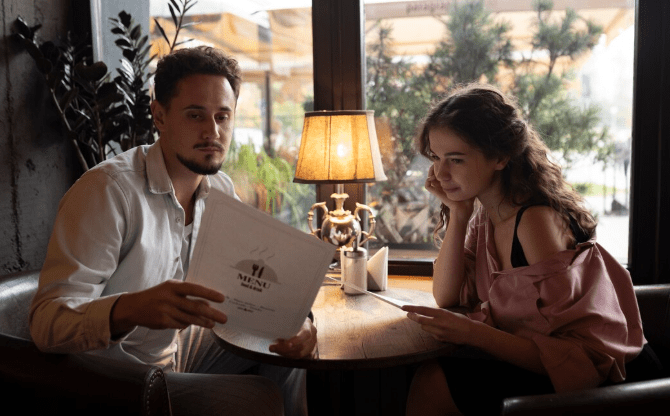
The cuisine isn’t the first thing you notice at one of these contemporary weddings. It’s the atmosphere. The way a playlist flickers in and out of conversation, the way the light falls across a rooftop just before sunset, and the faint sound of glasses touching somewhere behind you. When a plate finally arrives, it almost seems insignificant.
Today’s couples are shifting away from the conventional notion of a wedding menu, which consists of a starter, main course, and dessert that are all carefully timed and served, and toward something less regimented. First, there is the atmosphere. Food comes next. This change may have more to do with how people now perceive memory than it does with food preferences.
| Category | Details |
|---|---|
| Trend Focus | Atmosphere-driven dining experiences |
| Traditional Model | Structured multi-course meals |
| New Approach | Flexible, narrative-based menus |
| Key Drivers | Personalization, intimacy, guest experience |
| Influences | Restaurant design psychology, social trends |
| Common Venues | Rooftops, boutique restaurants, outdoor spaces |
| Sensory Elements | Lighting, music, scent, layout |
| Guest Experience Goal | Immersion and emotional connection |
| Industry Shift | From catering to curated storytelling |
| Reference | https://www.vue.com.sg/news/allure-altitude-why-more-couples-are-saying-i-do-rooftop-restaurants |
For instance, the menu at a Singaporean rooftop venue is frequently described as part of a greater story rather than as a collection of dishes. Instead of arriving when a schedule requires it, plates arrive when the time feels right. Not because it’s the next item on the list, but because it fits the mood, a shared dessert might show up just as the sky turns blue. As this develops, it seems that timing has shifted from being logistical to being emotional.
Wedding menus used to be structured, predictable, and somewhat rigid, much like blueprints. In order to serve hundreds of guests in a row, caterers concentrated on efficiency. It was successful. It continues to do so. However, it frequently leaves little space for spontaneity, pauses, and unplanned moments.
On the other hand, atmosphere-driven menus focus more on creating an experience than feeding a crowd.
This change has a psychological component as well. Food perception is influenced by lighting, sound, and spatial arrangement, according to research on restaurant design. Warm, gentle lighting makes a dish seem more decadent. Eating can be accelerated or slowed down by music. The length of time that guests stay can even be influenced by the distance between tables.
They are asking, “How should this feel?” rather than, “What should we serve?” It’s an alternative beginning. One that results in menus created around moments, such as shared plates that promote conversation and smaller portions that let patrons move around, stay, and come back. The food starts to melt.
This strategy seems to be connected to a larger cultural change. Once big and frequently theatrical, weddings are getting smaller and more deliberate. The number of guests decreases. Venues become more specific—rooftops, gardens, intimate dining rooms. Couples are free to try new things because they have fewer people to oversee.
It’s difficult to ignore how this impacts the event’s energy. There is less waiting when there is no rigid course progression. There are fewer moments when visitors sit motionless, not knowing what will happen next. Rather, the evening unfolds. Talking goes on. People are moving around more. Quietly, the atmosphere takes over.
Some contend that giving up on traditional courses runs the risk of losing a sense of occasion, and there is still a place for structure. A well-executed three-course meal has its own rhythm, its own elegance. It provides clarity, a shared experience that unfolds uniformly for everyone. Atmosphere-based menus, by comparison, can feel less predictable, more flexible.
It’s still unclear whether this trend will fully replace traditional formats or simply exist alongside them. However, the appeal is clear. For many couples, the goal isn’t perfection—it’s authenticity. Instead of reenacting what is expected of them, they want their wedding to feel like an extension of who they are. In that situation, food becomes a part of a greater narrative.
An economic component is also present. Smaller, more flexible menus can reduce waste, allow for higher-quality ingredients, and make budgeting more adaptable. Portions are frequently planned precisely rather than in excess. Even though it doesn’t always feel like it, this change is practical.
Watching this unfold, there’s a quiet realization: the definition of a “good meal” is changing. It’s no longer just about taste or presentation. Context—where you are, who you are with, and what is going on around you—is crucial.
And perhaps most importantly, how you feel about it. When couples create menus based on ambience, it’s difficult to ignore the fact that they are actually creating memories. The sensation of that evening—the light, the sound, the sense of being there—tends to endure longer than the taste of a dish.
That might be their ultimate goal. Not just a meal, but a moment that holds together.
