

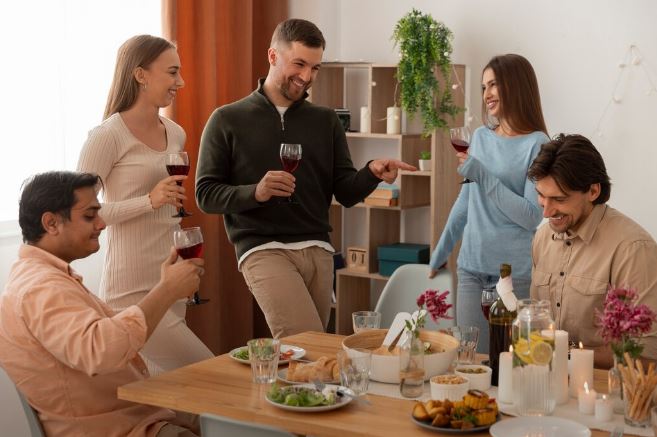
The emotional grammar of an evening is silently created by hosts, who do more than just set up the chairs and place the food order. This grammar determines whether the night is remembered as a memorable event or as a passing fad. When a host greets every guest within the first five minutes, provides a succinct but clear explanation for the gathering, and adjusts lighting and sound as the evening goes on, they are engaging in a subtle yet incredibly powerful form of social engineering.
When these actions are repeated, a shared expectation is created that guests will unwind, talk, and listen in ways that feel safe and surprisingly intimate. People have become especially hungry for intentionally designed gatherings—meetings that are organized with emotional outcomes in mind rather than just logistical checklists—in recent seasons, following periods of social disruption and remote living. The host’s role has compellingly expanded into something that matters both personally and civically.
| Key fact | Brief |
|---|---|
| Core idea | Hosts act as conductors of feeling: greeting, design and small rituals set emotional tone. |
| Emotional levers | Presence, pacing, seating, sensory cues, ritualised openings and decisive closings. |
| Practical moves | Warm welcomes, short purpose statements, curated playlists, layered lighting, intentional seating. |
| Cultural context | Celebrity examples, social feeds, mental-health trends, sustainability preferences. |
| Social payoff | Stronger family ties, reduced loneliness, intergenerational storytelling, ritual renewal. |
| Reference | https://www.psychologytoday.com |
A single, deliberate opening ritual can reframe an entire evening because the first few minutes set a disproportionate amount of the tone. Experience design studies and the testimonies of numerous hosts demonstrate that guests remember beginnings and endings the most. Like a musical overture, a brief welcome—two sentences outlining the reason the group has gathered, a group toast, or the lighting of a single candle—sets the tone and expectations and allows people to unwind into the position you’ve provided.
Gatherings with a purpose are more memorable, according to Priya Parker, whose work on the art of gathering has been widely circulated among planners and thoughtful hosts. She suggests creating invitations that tell a short story and opening remarks that articulate the small social contract guests are entering, and hosts who use this approach report deeper conversations and easier-to-manage conflict.
Lighting, sound, aroma, and layout are all part of the emotional infrastructure that either strengthens or undermines a connection. Scent cues—rosemary on the table, a citrus garnish near the drinks—anchor memory and can be especially helpful in family settings where shared smells trigger stories across generations. Dimmed, warm lighting lowers physiological arousal and softens the edges of minor social friction.
A playlist that starts off low and steady and then subtly picks up as desserts arrive performs emotional pacing so reliably that it can make silences feel spacious rather than awkward. A kind of hospitality that is both pragmatic and gentle is practiced by hosts who responsively modify sensory inputs, such as turning up the light for a group photo or turning down the volume during a private story.
Seating is a political act masquerading as décor: deliberate placement places predictable antagonists apart to reduce the likelihood of confrontations, mixes reserved older guests with chatty younger ones, and places possible interlocutors within easy reach of one another. In one family reunion I witnessed, the host seated two cousins who hardly ever spoke at the middle of the table.
A brief conversation about a game they played together as kids became the evening’s unifying theme; the thoughtful placement had done more relational work than any icebreaker could. Because seating maps can gently encourage group dynamics toward curiosity rather than competition, event planners and family therapists frequently agree on this point.
As much as food nourishes bodies, it also shapes mood; menus that highlight family recipes and seasonal ingredients encourage nostalgia and ease social tension by providing a familiar focal point. A simple, well-prepared meal—stew shared in family bowls, a pie passed down through three generations—serves as a social glue: by the second course, people who may have started the evening wary are exchanging confessions and cooking advice. Because guests feel both nourished and delighted, and delight acts as a social accelerant, hosts who strike a balance between accessibility and novelty—simple comfort combined with one unique element—frequently achieve the richest conversational payoff.
Language is important: brief, genuine introductions and minor guidelines give meetings structure and allow for intimacy. Think about the simple interventions that Priya Parker proposes, such as asking guests to share a single story, implementing “one conversation” at dinner, or enforcing a lighthearted rule that calls for two new introductions prior to dessert. These strategies are especially creative because they result in more equitable participation and encourage more reserved guests to join the group without embarrassing the more outspoken. “Tonight let’s celebrate what kept us going this year” is an example of a host who is willing to articulate a brief intention. This frame primes guests both intellectually and emotionally, and it frequently results in deeper conversation and fewer tangents that divide the group.
The most careful art of a host is managing friction. When a conversation veers toward conflict or an old wound comes up, a skilled host can read micro-signals and reroute without upsetting the flow. They can do this by offering a glass, changing the music, suggesting a quick activity, or even moving the conversation to a more gentle subject with a disarming story. These actions are protective rather than manipulative; they maintain dignity while diverting attention from escalation. Families that establish intervention norms gradually foster gathering cultures in which arguments are discussed with interest rather than as a means of settling scores.
One valuable lesson from celebrity hosting is that presence is more important than spectacle. Prominent hosts who garner love are frequently those who listen, pose insightful questions, and share rather than take all of the attention; they set an example for other hosts to follow, which is to spread real curiosity and to end discussions politely when it’s appropriate. A beautifully designed table cannot replace a felt sense of welcome, but social media feeds have raised the aesthetic bar by promoting exquisite tables and signature cocktails. However, these aesthetics are only significant if the emotional architecture underneath them is still in place.
When homes are transformed into places of deliberate connection, there are wider social benefits; as studies show that loneliness is on the rise in all age groups, gatherings that focus on emotional safety serve as miniature care facilities. These changes are particularly forward-looking because they align hospitality with ethics and ease. Young hosts, who are frequently influenced by public conversations about wellness and inclusivity, bring new sensibilities, such as shorter event windows so friends can rest, plant-forward menus that respect dietary choices, and low-waste practices that mirror larger values. When hosts choose to practice mindfulness, their small gestures add up to create a culture where social energy is maintained rather than depleted at gatherings.
The host is kept among the guests rather than backstage by using practical planning techniques like make-ahead dishes, schedules that allow for breathing room, assigning tasks to trustworthy friends, and rituals that can be repeated without difficulty. Saying hello to each newcomer, pouring a communal welcome drink, and concluding with a small token or expression of gratitude are simple rules that establish ritualized bookends that make the evening memorable and safe. The details that people remember years later—the aunt who never fails to light a candle, the cousin’s unusual toast, the host’s bowl of chocolates at the door—are the little repetitions that turn into family legend.
Anecdotes show that small inventions often work best. For example, at a recent potluck, the host invited groups to share one small act of kindness they had received that year instead of giving a planned speech. This led to confessions and laughter, thawing a long-standing argument between two relatives and focusing the evening on thankfulness rather than drama. The turn of events that night demonstrated how simple, informal cues can have disproportionately strong emotional effects.
Last but not least, hosts who adopt an ethic of imperfection serve as resilient role models. When a dish is delayed or a playlist is flawed, a humorous remark and a focus on the people and stories that truly matter lowers the tension and creates room for genuineness. Authenticity is what guests notice, not polish; they recall the humane yet choreographed pacing, the quiet generosity of attention, and the feeling of being noticed. Mastering these hosting techniques—warmly, intentionally, and persuasively—amounts to an act of care whose benefits ripple through families and into communities, subtly strengthening the social ties that keep us alive in a time when many people yearn for connection and few know how to steward it.
