

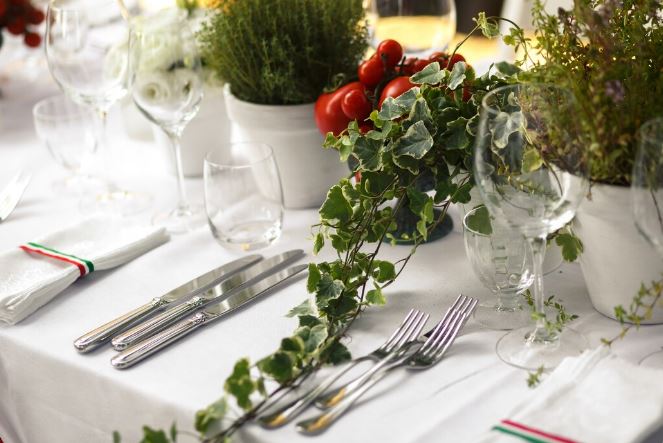
Over the past decade, garden receptions have shifted from polite champagne and canapés to something closer to a live-food festival, only better dressed and more intentionally curated. Planners say couples are treating the lawn like a blank canvas, using menus to sketch out their values, memories and ambitions. It is a quiet change that feels particularly innovative, driven by climate concern, social media, and a desire for parties that feel less staged and more like an extended, joyful conversation. The end effect is a laid-back entertainment style that is incredibly effective in the background.
| Topic | The Culinary Trends Reshaping Modern Garden Receptions |
|---|---|
| Primary Setting | Outdoor lawns, orchards, courtyards and marquee gardens |
| Key Themes | Sustainability, plant-based menus, interactive food, global fusion, tech-assisted planning |
| Guest Experience | Relaxed, social, photogenic and notably immersive |
| Catering Priorities | Local sourcing, zero-waste methods, grazing tables, live cooking, inclusive dietary options |
| Design Influence | Food-as-decor concepts, edible flowers, colourful shared platters |
| Reference Link | https://guide.michelin.com |
Sustainability now sits at the heart of these receptions, not as a box-ticking exercise but as a guiding principle. Caterers talk about provenance with the enthusiasm sommeliers once reserved for rare vintages, naming farms, bakers and growers as naturally as they list ingredients. By sourcing from nearby fields and kitchen gardens, they keep menus fresh, carbon footprints significantly reduced and stories exceptionally clear for guests who like to know what they are eating and why it matters. One chef likened his network of regional producers to a well-trained football back line, silently ensuring that everything stays together while the front-runners score the flavor goals.
Plant-based cooking has become the most visible expression of that shift. People’s confidence with non-meat menus increased during the pandemic as more vegetables were prepared at home, and these practices have also significantly raised expectations at events. Now, couples cheerfully ask for hero dishes built around brassicas, pulses and grains, trusting chefs to make them not just acceptable but genuinely exciting. A platter of charred tenderstem broccoli with citrus, seeds and whipped plant-based cheese can disappear faster than slow-roasted beef, which would have sounded almost absurd ten years ago. The best caterers treat these menus as a creative playground, finding that vegetables are incredibly versatile once you stop treating them as a side note.
Zero-waste practices are quietly changing kitchen logic behind the marquee. By integrating simple waste audits and smarter prep, teams are discovering how much can be rescued, repurposed and reimagined without guests ever feeling deprived. Carrot tops become bright pesto for crostini; herb stems are blended into oils; day-old bread is transformed into savoury crumbs or sweet croutons for dessert. For planners, these details are particularly beneficial because they support sustainability messaging while also controlling costs that might have spiralled. To guests, the food simply tastes layered and interesting, without any hint of compromise.
The structure of the meal has adapted to this new mindset. Traditional three-course dinners feel increasingly out of place among wildflowers and string lights, where guests prefer to wander, talk and snack as they go. Grazing tables have stepped into that gap with remarkable ease, becoming both décor and buffet, piled high with cheeses, fruit, charcuterie, crudités, dips and breads. One photographer told me these abundant tables are “like edible still-life paintings”, remarkably effective at getting guests out of their seats and into conversations. In that sense, the buffet has been upgraded into a social engine.
Food stations and live cooking areas add another layer of movement. Over recent seasons, planners have reported a rise in small, focused stations rather than one big queue: tacos in one corner, fresh pasta in another, dumplings or bao buns a few steps away. By placing chefs at these points, stirring, searing and plating on show, receptions tap into the same “culinary theatre” seen at festivals and chef’s table restaurants. It is a format that is extremely reliable at breaking the ice; guests bond over questions like, “Have you tried the miso cauliflower yet? ” far more easily than they do over assigned table chat.
Dessert has broken free from the single towering cake. Since social platforms began rewarding variety and colour, dessert bars and sweet stations have become a natural fit, particularly under a marquee roof. Rather than one flavour that must somehow please everyone, couples choose clusters of small treats: tartlets, mini pavlovas, plant-based truffles, nostalgic traybakes revamped with better chocolate and seasonal fruit. This approach is surprisingly affordable when planned carefully, because quantities can be tightly tailored and leftovers are significantly reduced. It also lets guests graze without feeling they have committed to a heavy slice when they really just wanted a bite.
Personalization runs through all these choices like a stitched signature. Nowadays, a lot of couples use the menu as a storybook, making references to shared interests, family recipes, and vacations. One pair who fell in love over late-night ramen asked for a DIY noodle bar under the apple trees, steam rising like a soft veil in the evening air. Another, raised between Mediterranean and South Asian households, designed a family-style spread where mezze plates met spiced grills and citrus-bright salads, all laid along a single wooden table. These details are not just charming; they are particularly innovative in how they turn catering into autobiography.
Global flavours are arriving on the lawn with quiet confidence. Catering forecasts highlight Malaysian, Brazilian and Colombian dishes as rising stars, and you can already taste that trend at forward-thinking receptions. Cassava bites sit beside arancini; smoky feijoada-inspired stews appear in tiny cups; tangy arepa sliders arrive piled with local vegetables and herbs. Guests who once travelled for this kind of food now find it threaded through a garden party, an evolution that feels both playful and reassuringly familiar. Fusion is now about honoring various heritages at the same table rather than being about novelty for its own sake.
Foraged and hyper-local elements accent this story of place. At venues with woodland edges or wild meadows, chefs head out in the morning to pick sorrel, nettle tips, wild garlic, edible flowers or mushrooms, returning with baskets that look like something from a children’s storybook. These ingredients, when folded into butters, salts, tempura batters, or syrups, lend dishes a subtle magical touch, as though the garden itself were bending over to serve the guests. When used properly, they can ground an event in a way that makes it feel unique rather than generic.
Dietary requirements are now considered the norm rather than an awkward exception. Early-stage planners frequently face the difficulty of gathering precise data without overloading couples with forms, but technology has greatly simplified that process. These days, online RSVPs record lifestyle choices, allergies, and preferences in tidy dashboards that chefs can use. Caterers begin with dishes that can be elegantly modified, such as a hero salad that can be served with dairy, without dairy, with nuts, or without nuts, all plated to look nearly identical, rather than creating a single, dominant menu with a few apologetic alternatives. The guest who is gluten intolerant no longer feels like a problem to be solved; instead, they feel expected.
This new mode of reception is shaped in part by technology, which is more subdued but no less significant. Event planners can optimize everything from oven capacity to bar staffing by using event software, which maintains service even when the setup includes patios, tents, and lawns. A garden in Sussex or North Carolina can be transformed into a shared celebration for cousins watching in different time zones through live-streaming, which is still a helpful tool for family members who are unable to travel. Some caterers are experimenting with QR code menus that display allergen lists, farmer profiles, and dish stories, providing incredibly clear information without overcrowding the table with print. These tools are very effective when used carefully, enhancing rather than detracting from hospitality.
Though less obviously than calorie counts on menus, health trends also have an impact on decisions. Heavy main courses are replaced by small plates full of vegetables, fiber, and lean proteins; late-night snacks tend to be more nourishing comfort food than greasy decadence. With their assortment of tea-based spritzes, ferments, herb-laced sodas, and inventively flavored waters, mocktail bars have become a mainstay. Offering serious non-alcoholic options has become especially advantageous for hosts who want all guests to feel taken into consideration since the trend away from heavy drinking started to pick up speed. Additionally, it prolongs the dance floor’s duration, which planners discreetly value.
When combined, these changes in cuisine are changing our understanding of the garden reception as a social event. The event operates more like a well-maintained ecosystem, where each component supports the others, rather than following a predetermined flow of toasts, courses, and formalities. Food moves people around, brings them together, and leaves lovely reminders long after the lights go out, much like a swarm of bees pollinating conversations. That is a positive indication for couples who are making plans in advance. It implies that future festivities can feel wonderfully, generously joyous while also being kinder to the environment, more flavorful, and more truthful about who we are.
